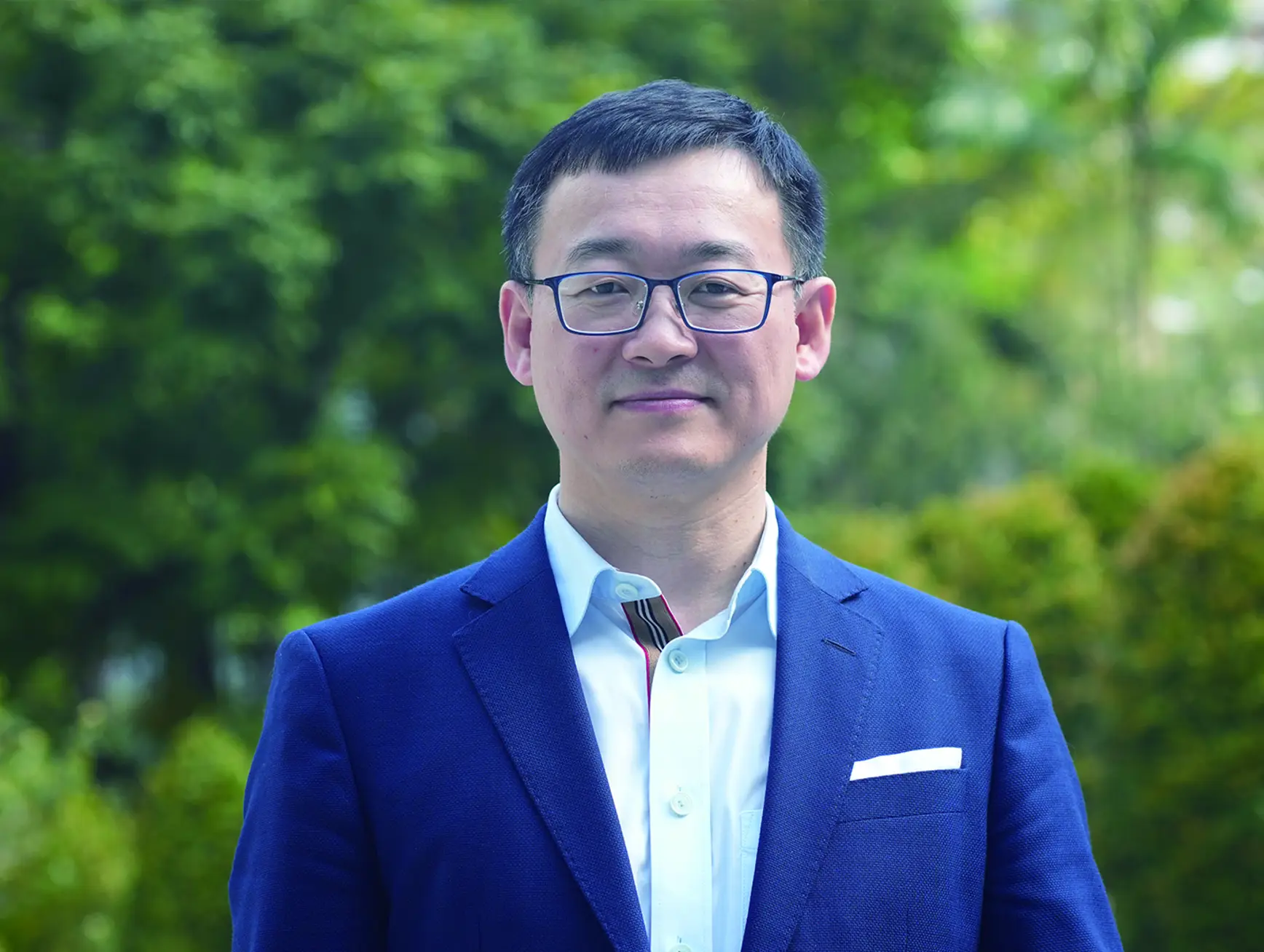
As corporate globalisation enters a sophisticated new phase of deep integration, Transfar Group — a conglomerate with a 40-year heritage and a footprint spanning 130 countries and regions — recently unveiled its strategic blueprint to establish its global management headquarters in Hong Kong. In an interview with Ta Kung Pao, Vice President of Transfar Group, Yao Chenpeng, remarked that “steadfast progress is the only viable path for sustainable global expansion.” Against this backdrop, Hong Kong’s distinctive advantage, backed by close ties with Chinese Mainland, provides a secure and unparalleled environment, making it the ideal platform for managing global operations.
“As a Chinese Mainland enterprise, Transfar’s overarching strategy for going global increasingly weighs the impact of the international landscape on economic entities,” Yao acknowledged. While the ease of trade and finance is a baseline requirement when selecting a corporate base, strategic advantages carry more weight. He pointed out that Hong Kong is not only a world-class financial, trade, and shipping hub but is also aggressively pivoting towards innovation and technology. Coupled with the city’s distinct advantage of enjoying the strong backing of Chinese Mainland and being closely connected to the world, Transfar identified Hong Kong as the definitive management and operational engine for its global visions.
Building Three Major Functional Platforms
“Our roadmap involves building a global management headquarters in Hong Kong, with a laser focus on three pillars: strategy, capital, and compliance services. We intend to transition our various global entities into a structure held and managed through Hong Kong,” Yao explained. “By tapping into the strategic analytical and planning prowess of our Hong Kong office, we will expand our global footprint. Simultaneously, we will establish a capital investment and treasury management platform here to optimise global capital operations, alongside a global risk control and HR service centre to fortify our international service capabilities.”
Hong Kong’s Advantage of an International Vision
Transfar Group’s vision for its Hong Kong headquarters is crystallised through three functional platforms. The first is the strategic platform. Yao stated: “The group will survey the global market and our industrial sectors from a Hong Kong perspective. By synthesising market intelligence, we will refine our global growth strategies to steer our international expansion.” Hong Kong’s cosmopolitan outlook and its role as an information hub will serve as the group’s global coordination centre.
The second is the capital platform. Yao noted, “We plan to utilise Hong Kong as the anchor for the capital links of our overseas subsidiaries.” Furthermore, by establishing a corporate treasury centre in the city, the group aims to “pool overseas capital in Hong Kong to achieve optimal efficiency through sophisticated capital operations.” This underscores Hong Kong’s core role in the group’s global fund deployment and asset management.
The third is the compliance and service platform. Yao emphasised that to ensure security throughout the growth process, Hong Kong will be the designated jurisdiction for signing overseas production, manufacturing, and trade contracts. Concurrently, the group will leverage the Hong Kong management centre to build robust global compliance and risk management frameworks, ensuring that its global trajectory remains both secure and sustainable.
Yao observed that while Transfar spent the past three decades exporting products worldwide — achieving internationalisation, the future lies in the localisation of supply chains and R&D to achieve true globalisation.
This strategic pivot vividly illustrates the profound transformation in how Chinese Mainland enterprises go global. Leveraging its dual advantages as a bridge between the Chinese Mainland and the world, supported by a mature financial, legal, and professional services ecosystem, Hong Kong is evolving from a traditional financing and trade window into a strategic operational hub where Chinese Mainland firms can manage global networks, mitigate integrated risks, and achieve long-term security.
Achieving the Shift from “Selling Products” to “Taking Root Locally”: Hong Kong Plays a Key Role
“In the past, Transfar took its business to the world, establishing Chinese-made functional chemicals and agrochemical products as globally recognised quality brands. We define this stage as internationalisation,” Yao explained. “Moving forward, we will cultivate a global network through our Hong Kong headquarters, regional centres, and various subsidiaries, gradually localising supply chains, production, and R&D within major markets. Localisation will become the hallmark of Transfar’s globalisation. Simultaneously, our Hong Kong centre will build the compliance and risk management architecture necessary to keep this growth on a steady and sustainable footing.”
“By systematically integrating our global entities under Hong Kong’s ownership and management, we can direct our global development using the strategic depth of our Hong Kong office.” In the face of a complex international climate, Yao believes that “establishing this platform in Hong Kong allows us to achieve low-risk, sustainable growth through rigorous compliance.” Hong Kong’s role is precisely this: to facilitate Transfar’s global ascent while effectively managing risk, steadily achieving a strategic evolution from “Transfar of China” to “Transfar of the World”.
InvestHK Plays a Bridge Role to Expand Networks for Chinese Mainland Enterprises
The establishment of Transfar Group’s global management headquarters in Hong Kong was not a mere relocation of business, but a strategic upgrade from a singular trade function to integrated management. Yao Chenpeng admitted that the group encountered tangible challenges during this journey, and the proactive intervention and support from the HKSAR Government proved instrumental in the successful landing of the enterprise.
“We previously maintained a presence in Hong Kong primarily for trade, without a localised management team. Consequently, we faced considerable uncertainty on how to build a global headquarters and how to access government support,” Yao said, echoing a common hurdle for firms in the early stages of such a transformation. The original Hong Kong entity was merely a business interface, lacking the local professional talent, network linkages, and policy insights required to function as a regional headquarters.
During this critical juncture, various agencies under HKSAR Government acted as vital intermediaries and catalysts. “InvestHK and the HKTDC, among others, provided us with extensive support,” Yao stated. “InvestHK introduced us to professional consultants specialising in outbound expansion and local industry associations. These resources allowed us to hit the ground running with our headquarters construction.” This resource-matching service precisely addressed the group’s initial lack of local networking, accelerating the setup process.
Effective Government Support Bolsters Confidence in Setting Up
Such support did more than just solve logistical issues; it reinforced the group’s confidence in taking root in Hong Kong. Yao stated that the goal is to “rapidly build up our management capacity in Hong Kong to create a synergy with our five established global regional centres.” With government assistance, Transfar is quickly augmenting its local team, systematically transforming Hong Kong from a “trading node” into a strategic pivot that coordinates five global regions. This case demonstrates that Hong Kong’s magnetism for Chinese Mainland firms lies not only in its inherent market advantages but also in its proactive, professional government service ecosystem, which effectively addresses the complex needs of enterprises in this new era of globalisation.
01.06.2026
The purpose of the above content is to showcase companies which have set up or expanded in Hong Kong, with the assistance from InvestHK. It does not in any way constitute recommendation or endorsement by InvestHK.