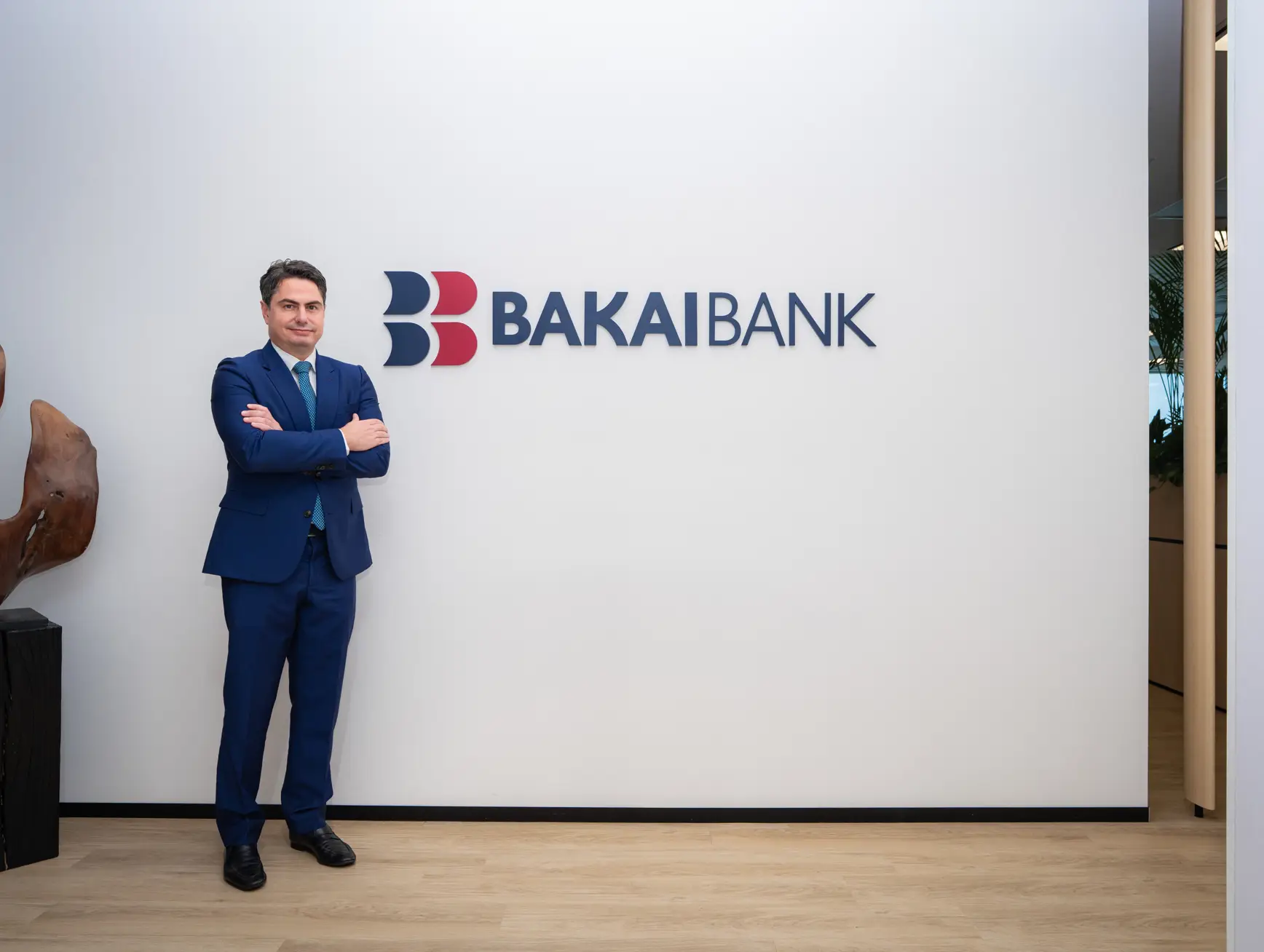
"Central Asia is new, dynamic, and largely untapped," said Andreas Meletiou, CEO of BAKAI Bank Hong Kong. "Trade between Central Asia and China surpassed US$100 billion in 2025 and is expected to reach about US$120 billion by the end of 2026. Yet, financial infrastructure for this corridor remains thin. That gap is precisely why we are here."
Headquartered in the Kyrgyz Republic as a leading commercial bank, BAKAI BANK secured a restricted banking licence from the Hong Kong Monetary Authority (HKMA) in October 2026. The milestone establishes BAKAI BANK as the first Central Asian financial institution to launch in Hong Kong and the wider Asia-Pacific region. Operating from Hong Kong, the branch delivers tailored cash management, trade finance, and treasury solutions to corporations and financial institutions across both regions.
Bridging the Corridor Gap
"Financial institutions in Asia Pacific are still gaining familiarity with the corridor. On traditional trade routes, banks have spent decades building relationships and networks. Here, that journey is only just beginning," Meletiou explained.
That dynamic presents daily operational hurdles for businesses. "Cross-border trade between Central Asia and Asia Pacific currently faces higher costs, elevated risks, and substantial transactional friction compared to established routes. Companies on both ends must navigate unfamiliar regulatory frameworks and market norms, creating significant opportunity to streamline cross-border efficiency."
"Having an established presence in both Central Asia and Hong Kong makes us a highly effective bridge," Meletiou noted. "Central Asia’s modernization is driving surging demand for Chinese electric vehicles, industrial machinery, consumer goods, and critical infrastructure investment. Simultaneously, Central Asian exports into Chinese Mainland and the broader Asia-Pacific region are expanding rapidly."
Hong Kong as the Strategic Gateway
"Hong Kong is a super-connector— the bridge between East and West, and a vital gateway to and from Chinese Mainland," said Meletiou. "As a global financial hub, it enables us to seamlessly facilitate capital and trade flows between Central Asia and key regional markets like South Korea and Singapore."
Meletiou also emphasized the city's robust legal framework, a world-class regulator whose authorization confers international credibility, and a sophisticated banking sector with over a century of heritage. "At the end of the day, success hinges on deep banking expertise. Hong Kong’s rich and diverse talent pool has been instrumental in building our team."
The Comprehensive Avoidance of Double Taxation Agreement (CDTA) signed between Hong Kong and the Kyrgyz Republic in March 2026 provides additional tailwinds. "We are already seeing the impact," Meletiou added. "Central Asia’s primary exports to China —including oil, natural gas, minerals, metals, and agricultural commodities—require substantial liquidity, structured trade finance, and sophisticated risk mitigation. To manage these complexities, Central Asian exporters are increasingly establishing corporate vehicles in Hong Kong. As the world’s premier offshore RMB hub, Hong Kong serves as an indispensable financial, legal, and risk-management base connecting resource suppliers directly with Chinese mainland markets."
Navigating Market Entry
For companies expanding into Central Asia, Meletiou advised partnering with a reliable bank to manage transactional risk and navigate regional regulatory and tax structures early in the process.
"Exporters don't need to sacrifice competitiveness by demanding full advance payments, nor do importers need to take on delivery uncertainty through prepayments," he noted. "Structured cross-border trade finance mitigates counterparty risk while addressing working capital needs far more efficiently than high-cost local borrowing."
Built for the Long Term
InvestHK played a pivotal role in securing BAKAI BANK’s commitment to Hong Kong during an executive mission to Central Asia, including the Kyrgyz Republic. It has supported the bank throughout its market entry with licensing guidance, regulatory connectivity, and introductions across the local ecosystem.
With strong foundations now in place, BAKAI BANK Hong Kong aims to become a meaningful financial intermediary along the corridor within the next three years.
"This is a long-term strategic commitment. The Central Asia–Asia Pacific corridor is expanding rapidly, and we are at the very beginning of its growth trajectory," Meletiou said. "We will remain consistent, persistent, and focused on balancing growth with rigorous risk management."
03.09.2026