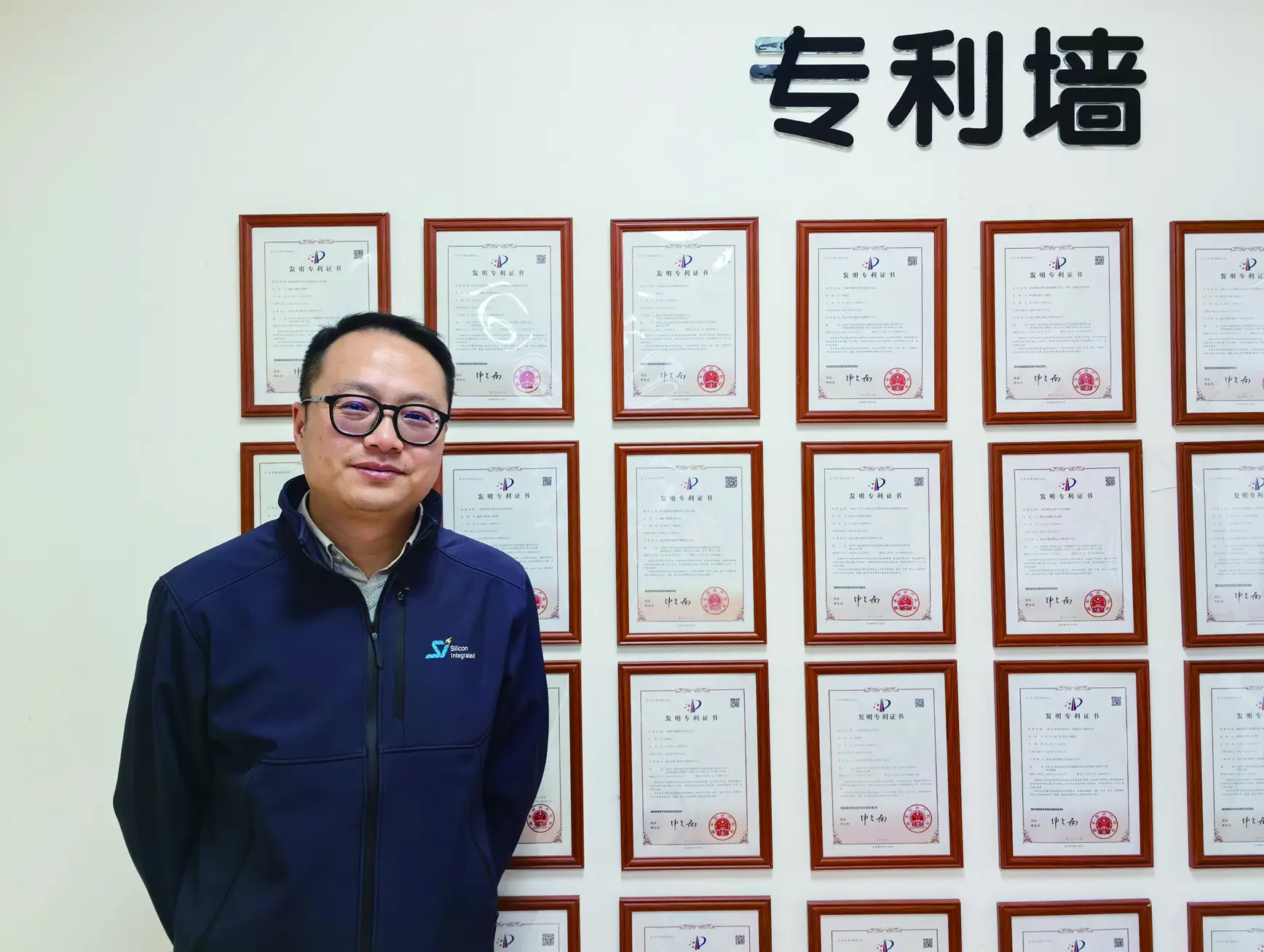
Chinese Mainland semiconductor enterprises are increasingly leveraging Hong Kong’s capital markets as a springboard for international expansion. In the latter half of 2025, Silicon Integrated Co., Ltd — a pioneer in intelligent sensing chips, officially submitted its listing application to the Hong Kong Stock Exchange. The company plans to channel the proceeds into core research and development for intelligent sensing, machine vision, and imaging technologies, while simultaneously broadening its global sales and service networks. As the HKSAR Government’s dedicated department for attracting foreign direct investment, InvestHK has provided consistent support to Silicon Integrated and other I&T enterprises, facilitating local establishment and introducing professional services to help them tap into global capital and markets through this international financial hub. Co-Founder of Silicon Integrated, Kong Fanxiao, noted in an interview with Ta Kung Pao that against the backdrop of rapid growth in AI and the low-altitude economy, Chinese Mainland firms are achieving decisive breakthroughs in 3D Time-of-Flight (ToF) and smart audio power amplifiers. With applications expanding across facial recognition, autonomous driving, and AR/VR, he remarked: “We look forward to achieving further international expansion via the Hong Kong platform.”
In early 2016, a founding team of scholars returning from Europe established Silicon Integrated in Wuhan. At that time, the Chinese Mainland semiconductor industry had yet to reach its current fever pitch; nevertheless, this team chose to tackle the formidable challenge of 3D ToF image sensor chips. While 3D ToF technology may sound abstract, it is already deeply embedded in our daily lives. With the advent of the AI era, the significance of 3D vision has become even more pronounced, driving rapid growth in emerging applications such as robot obstacle avoidance, scene modelling, precision robotic gripping, and LiDAR for autonomous driving.
Product Portfolio Scales to 11 Specialised Lines
In its infancy, the team grappled with multi-faceted challenges ranging from technical breakthroughs to supply chain construction. “Research and development are undeniably gruelling. Back then, there were very few international 3D ToF sensor companies to learn from, and we faced a constant stream of R&D hurdles,” Kong recalled. “Thanks to many team members’ long-standing expertise in 3D depth technology, we were able to consolidate our collective experience to refine our designs and ultimately launch a mature product.” In 2020, Silicon Integrated released its first ToF sensor chip and has since maintained a consistent cadence of product upgrades. To date, the company has established 11 product lines — including 3D ToF image sensors, optical sensors, smart audio power amplifiers, and OIS driver chips — with a product portfolio that covers 80% of the world’s mainstream mobile terminal manufacturers.
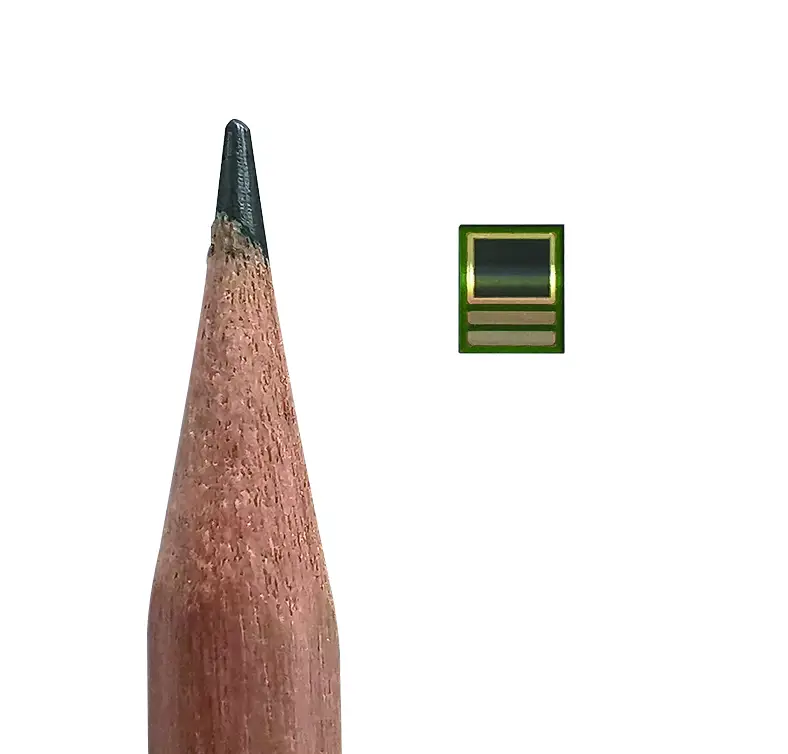
According to data from China Insights Consultancy (CIC), Silicon Integrated captured an 11.2% global market share in the optical sensor sector in 2024, with shipments reaching 283 million units—ranking it third globally and first in China. In the field of machine vision, its 3D iToF image sensor shipments reached millions in 2024, securing its place in the world’s elite tier. Kong stated: “Our in-house designed next-generation iToF products are one-third smaller in area than those of our competitors, consume only half the power, and offer superior precision. Our dToF products boast industry-leading resolution and outdoor detection distances of several dozen metres, overcoming traditional high-power consumption bottlenecks. Furthermore, by leveraging a fully domestic supply chain, our costs are a fraction of our counterparts. Our self-developed 5um VGA-level Back-Side Illuminated (BSI) high-resolution ToF sensor chip has also successfully entered mass production with significant orders. These milestones serve as a powerful testament to the continuous advancement of Chinese Mainland R&D.”
As Chinese Mainland semiconductor firms accelerate their journey abroad, Hong Kong’s role as a bridge between the Chinese Mainland and the global market has become increasingly pivotal. Throughout this process, InvestHK has provided I&T enterprises with policy consultation, international business development support, and landing assistance. Kong noted that as the company advances its international footprint, he anticipates deeper collaboration with InvestHK. He pointed out that the firm first hopes to leverage InvestHK’s platform resources to strengthen international marketing, systematically showcasing its technical strength and strategic layout to global clients, partners, and investors to enhance international brand recognition and influence.
Planning a Global Headquarters to Drive Strategic M&A
Regarding the development of an international headquarters, Kong revealed that the company is considering Hong Kong as a vital pivot for its global operations. He expects to secure more professional guidance and resource matching in areas such as financial architecture, tax planning, legal compliance, supply chain management, and intellectual property strategy. He believes that Hong Kong’s mature financial and legal systems will assist the firm in establishing an operational framework that meets international standards, thereby bolstering global competitiveness. Furthermore, as the company explores future overseas investments and cross-border M&A, it looks to InvestHK and the HKSAR Government for support in interpreting policies and regulations, navigating cross-border regulatory environments, and assessing international market risks to ensure a more robust global expansion.
“Our international headquarters will be rooted in Hong Kong, oriented towards the world, and backed by the Chinese Mainland,” Kong stated. Amidst an increasingly complex global trade environment, Hong Kong’s advantages as an international financial centre and a platform for institutional opening-up are particularly salient. “Determining how to better utilise this international platform to conduct business is a critical component of corporate globalisation. We look forward to more opportunities for exchange and cooperation with InvestHK and the HKSAR Government.”
Partnering with Hong Kong Universities to Cultivate Local Talent
The Silicon Integrated founding team originally comprised several Chinese Mainland scientists who had spent years studying and working in Europe. Most members are alumni of prestigious institutions renowned for 3D vision research, such as Delft University of Technology in the Netherlands and KU Leuven in Belgium. These universities have a deep heritage in ToF technology and are regarded as major global schools of thought in three-dimensional vision.
“Our technological DNA was international from the very outset,” Kong Fanxiao remarked. Regarding talent acquisition, the company not only recruits returning engineers but also actively collaborates with Hong Kong’s universities. In recent years, Silicon Integrated has planned industry-academic-research collaboration mechanisms with several local institutions, providing students with internships and joint training opportunities to systematically build a local talent pipeline. The company views talent development as the core of enterprise growth. “We are also exploring the possibility of attracting global semiconductor talent — for instance, by leveraging the geographical synergy between Hong Kong and Shenzhen to create a dual-city R&D and employment platform. This would attract high-end talent from Europe, North America, Japan, and South Korea to work in Hong Kong or the Chinese Mainland. By utilising talent schemes such as the Top Talent Pass Scheme (TTPS) and Quality Migrant Admission Scheme (QMAS), we can resolve issues related to visas, taxation, and schooling, and we hope the HKSAR Government will introduce sector-specific support policies for the semiconductor industry to help firms aggregate global expertise.”
An International Environment Tailored for Global Engineers
The company also values Hong Kong’s unique appeal for attracting international professionals. For high-end engineers from the West or Japan, Hong Kong offers a cosmopolitan living environment that facilitates seamless integration into cross-cultural teams. The firm anticipates that Hong Kong’s talent policies, alongside more comprehensive visa, tax, and educational support, will encourage more global semiconductor specialists to settle in the city. “In the future, we hope to establish a three-region synergy: Europe as the source of upstream innovation, the Chinese Mainland for engineering and industrialisation, and Hong Kong as our international window.” The team believes this strategic layout is not only conducive to absorbing global talent but also essential for serving an international clientele.
31.05.2026
The purpose of the above content is to showcase companies which have set up or expanded in Hong Kong, with the assistance from InvestHK. It does not in any way constitute recommendation or endorsement by InvestHK.