by Mr Herman Tse
Head of Business and Professional Services, InvestHK
Hong Kong is undergoing a once-in-a-generation transformation. Long recognised for its capital markets, professional services and role as a gateway between the Chinese Mainland and the global economy, the city is reshaping its next phase of growth and why that matters to foreign companies, investors and developers looking beyond the current cycle.
This reflects a broader evolution in Hong Kong's economic role. Alongside its traditional strengths in finance and professional services, the city is diversifying into advanced manufacturing, life sciences and technology-led industries that require both international standards and proximity to large markets. At the same time, a growing number of cutting-edge Chinese Mainland companies are going global and looking for platforms that allow them to internationalise while remaining close to their research, manufacturing and supply-chain bases. The Northern Metropolis has been planned explicitly to respond to both dynamics.
Introducing the Northern Metropolis: A Long‑Horizon Growth Engine
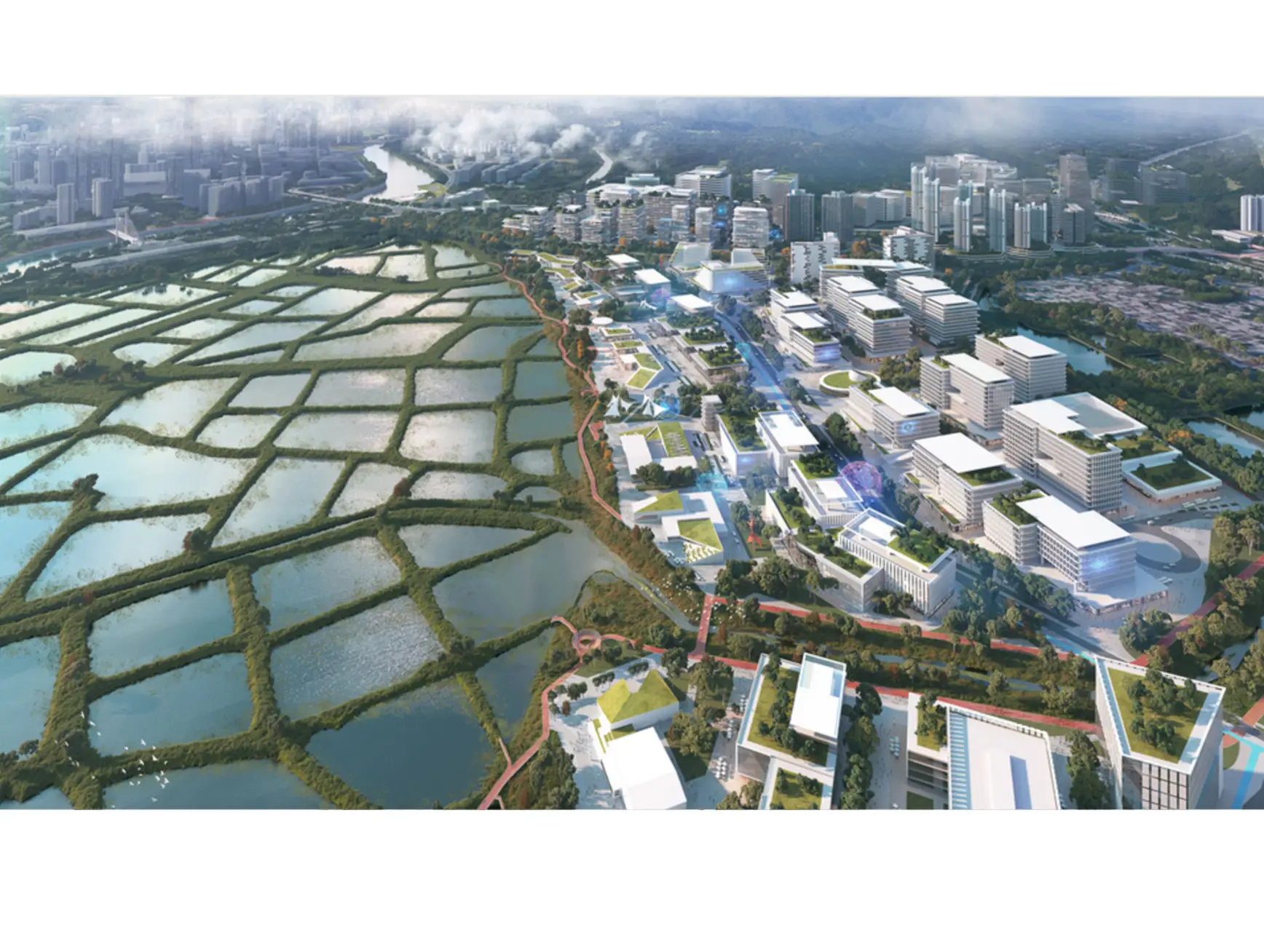
At the centre of this strategy is a long-horizon, government-backed commitment to build a new growth engine for Hong Kong. Covering a total land area of 30,000 hectares, the Northern Metropolis —roughly one-third the size of Hong Kong— is anticipated to support a population of around 2.5 million, including 500,000 new homes, while creating around 650,000 jobs. Over the next decade, it is projected to deliver more than 10 million square metres of economic floor space, underpinned by an infrastructure-led rollout that extends well beyond a single market cycle.
This level of stability and commitment, once taken for granted, have emerged as strategic differentiators in this macro environment. As supply chains are reconfigured and new global trade patterns emerge, long-term investors are increasingly selective about where they commit capital, particularly when projects involve physical assets, research and development or large-scale development.
The Northern Metropolis stands out because it is not opportunistic. Major transport infrastructure, including new rail links connecting the area internally, to Hong Kong's urban core and across the boundary to Shenzhen, as well as a new East-West highway corridor, has clearly defined commissioning targets stretching from 2027 into the mid-2030s
Equally important is how Hong Kong is aligning its urban fabric with its economic engines of growth. Hong Kong Island and the southern urban areas that grace the picturesque Victoria Harbour continue to function as the city's financial and professional services hub, where capital is raised, transactions are structured, intellectual property is protected and companies prepare for regional or global expansion. The Northern Metropolis complements it by providing space for what global cities often struggle to accommodate - technology development, research, advanced manufacturing and modern logistics within immediate reach of international markets.
Turning Collaboration into Institutional Advantage
A key driver of this development is Hong Kong's ability to enable what might be described as 'innovation osmosis'. In an increasingly dynamic and interconnected global innovation landscape, the city provides a trusted, multilateral environment in which Chinese Mainland and international innovators can interact, co-create and scale. Underpinned by a common law system and adherence to international standards, Hong Kong enables forms of collaboration that thrive on trust, shared standards, and global connectivity.
This model is already visible in practice. Initiatives such as InnoHK, which brings together around 3,000 researchers from multiple economies across dozens of laboratories, illustrate how Hong Kong converts connectivity into applied research capacity. It is also notable that the Greater Bay Area, with Hong Kong playing an important role, was recently ranked by the World Intellectual Property Organization (WIPO) as the world's leading innovation cluster, underscoring the region's growing significance in global research, commercialisation and venture activity.
These ecosystem strengths have translated into strong talent inflows. Since the launch of enhanced talent admission schemes in late 2022, Hong Kong has attracted over 270,000 professionals, enriching its globally fluent talent base.
University Town and Industry Integration
A core pillar of this talent and innovation ecosystem is the development of a new University Town within the Northern Metropolis. This forward-looking initiative will bring together post-secondary institutions on new, state-of-the-art campuses, creating a vibrant hub where academia and industry converge.
Hong Kong universities — five of which rank among the global top 100 — are establishing new campuses and R&D centres across three sites in the Northern Metropolis, with the first site at Hung Shui Kiu available as early as 2026. Critically, the Ngau Tam Mei site is designed to dovetail directly with the San Tin Technopole and the Lok Ma Chau Loop, ensuring that university R&D activities form an integral part of the technology cluster. By co-locating world-class research talent with advanced manufacturing facilities and innovation parks, the University Town will serve as a continuous engine for the talent pipeline and applied research that the Northern Metropolis's technology-led industries depend upon.
Advanced Manufacturing in Practice
Advanced manufacturing illustrates how ‘innovation osmosis’ can take practical form. While many Asian economies are investing heavily in sectors such as pharmaceuticals, health technologies and microelectronics, fewer offer environments where regulatory clarity, international standards and global market access come together consistently.
Hong Kong's global orientation and integration with the Chinese Mainland market allow companies to develop and refine advanced manufacturing processes in a setting where standards and intellectual property are well established. In microelectronics, this has enabled a model in which research and prototyping are conducted in Hong Kong, with production scaled across the Greater Bay Area within close geographic reach.
The Connectivity and Logistics Advantage
Other high-value sectors that have shown interest include pharmaceutical manufacturing and health technologies to premium supplements and Chinese medicine produced to globally recognised quality benchmarks. Notably, the gold refining and storage sector has also shown interest in the Metropolis, following the government's move to create a premier international gold trading hub, and recent deal with the Shanghai Gold Exchange.
The common thread across all these sectors is physical connectivity to supply chains and global markets. Here, the Northern Metropolis functions as connective tissue with state-of-the-art logistics facilities. With parts of the area located within minutes of Shenzhen Bay Port and roughly half an hour of Hong Kong International Airport and major container terminals with established routes, ideas, samples, components and finished products can move rapidly and securely between laboratories, production lines and global markets.
Innovation Osmosis in Action
While the Northern Metropolis is a long-term endeavour, elements of the model are already visible. The Hetao area bordering Shenzhen is home to the Hong Kong–Shenzhen Innovation and Technology Park, a tangible example of innovation osmosis in action. Close to 90 hectares, its first phase alone delivers around one million square metres of gross floor area, including purpose-built wet-lab facilities designed specifically for life sciences and advanced research.
The strategic partnership announced in May 2025 between global pharmaceutical leader Pfizer and the Hong Kong-Shenzhen Innovation and Technology Park in the Lok Ma Chau Loop area further underscores the appeal of an ecosystem where frontier research, cross-border collaboration and global connectivity intersect.
That ecosystem logic extends naturally into capital markets. One distinguishing characteristic is how closely innovation is linked to finance. Investors can assess an R&D facility, understand the technology and management team, and then work with the professional services ecosystem south of the city to support capital raising or prepare for an IPO at the Hong Kong Stock Exchange.
Shaping Asia’s Next Strategic Economic Platform
What the Northern Metropolis offers is a complementary value proposition. It provides immediate proximity to the Chinese Mainland's manufacturing depth, supply-chain scale, and fast-moving innovation cycles, all while operating within Hong Kong's trusted international regulatory, legal, and capital-market framework.
This creates opportunities for a powerful dual-hub model. Hong Kong provides a platform for advanced manufacturing, R&D, and rapid scaling into the Greater Bay Area, while foreign companies can leverage Hong Kong to tap into the vast opportunities across the Greater Bay Area.
At its core, the Northern Metropolis is about building a long-term, resilient ecosystem that compounds value over time. For those willing to take a long view, it represents not just a once-in-a-generation opportunity, but a chance to help shape one of Asia's most strategically positioned economic platforms.
Have an inquiry? Click here to contact us.